When will it ever be a ‘right time’?

The music business killed you Phil
They ignored the things you said
And cast you out when fashions changed
Says Phil “But I ain’t dead”

The FBI harassed you Phil
They smeared you with their lies
Says he “But they could never kill
What they could not compromise
I never compromised”

“Though fashion’s changed and critics sneered
The songs that I have sung
Are just as true tonight as then
The struggle carries on
The struggle carries on”

-Billy Bragg, I Dreamed I Saw Phil Ochs Last Night

Every single day of my life, i think about dialectics- in short, that relationship between the positive and not-so positive aspects of our existence. That relationship between our material conditions, and the roots of what shapes those conditions. The relationships between the past and our current actions, which inform the future.

It would be of little surprise to anyone that i am certainly thinking about it now.

i have been thinking a lot about it in relation to Phil Ochs, a clinically bipolar man whose abusive actions toward partners and other women were documented in books such as Phil Ochs: Death of a Rebel, by Marc Eliot. i think about how people attribute mental illness to Ochs’ demise (and eventual suicide the year i was hatched onto this earth), without consideration of the demise being prompted by a system that doesn’t address mental health (or intimate partner violence) in humanistic ways. i think about how artists whose works were once fueled by a righteous anger at an unjust system have quelled said anger to varying degrees, because they didn’t want to experience the same fate as Ochs, who in many cases has been written out of the annals of ‘protest music’, despite him being one of its strongest voices.

Ochs is a potent figure of contradictions; like most humans, he should never be singularly admonished or lionized. This certainly is another discussion for another time; no artist, regardless of how ‘connective’ they are, should be absolved of their abusive actions, or other problematic behaviors. Again, past actions (and our current responses) inform what occurs in the future.

While it is an accurate assertion that music itself cannot save the world; it would not be inaccurate to state that the best art is the one which challenges the status quo. From the ‘Satanic panic’ outrage, the ‘Disco Sucks!’ movement, the development of the bi-partisan Parents Music Resource Center (PMRC) and the steamrolling of rap records; there has always been an active opposition to those on cultural, social and political margins. The folk movement Ochs was a part of was no different. While the FBI’s files on artists were given a wide berth (regardless of political affiliation), there was heavy concentration on those who were most outspoken against capitalism, imperialism and colonialism- those who not only sang songs about freedom fighters, but participated in organizing and mobilizing themselves.

It again, should be of no surprise to anyone to know that Ochs (who wrote songs such as the still applicable ‘Here’s to the State of Mississippi’ and was friends with Victor Jara) was on an FBI watch list.

Yes, even though lyrics such as “All the rudiments of hatred are present everywhere/And every single classroom is a factory of despair/There’s nobody learning such a foreign word as fair”; as well as “They’re guarding all the bastions of their phony legal fort/Oh, justice is a stranger when the prisoners report/When the black man stands accused the trial is always short”; “And criminals are posing as the mayors of the towns/And they hope that no one sees the sights and no one hears the sounds” and “Unwed mothers should be sterilized, I’ve even heard them say” were all written in 1965, they absolutely still apply, regardless of what administration is representing the white house.

This is why, as accurate as many of Ochs’ songs are regarding the state of U.S.-based injustice (as well as songs that extend to imperialist violence in South America and Africa), there is a specific song i am thinking about. People love this song, but have not necessarily heeded the words. Its brilliance stands among the lines of songs such as the Dead Kennedys’ ‘Holiday In Cambodia’, and films such as Jordan Peele’s Get Out.

‘Love Me, I’m A Liberal’, while perhaps being one of Ochs’ most recognized songs (and one which is continually updated as the years go by), is simultaneously undervalued. It is a brilliant, biting satirical reading of the individualist selective ‘moral compass’ of those who identify as (of course)… liberals. In his performance of the song, he even prefaces it with this scathing quip: “In every American community, you have varying shades of political opinion. One of the shadiest of these is the liberals. An outspoken group on many subjects. Ten degrees to the left of center in good times, ten degrees to the right of center if it affects them personally. So here, then, is a lesson in safe logic.” Phil Ochs’s commentary is in the musical tradition to what Glen Ford or Chris Hedges have been to the journalistic tradition, regarding this subject: that democrats are the ‘more effective evil’, due to the complacency people develop, as people do not see what the democrats do as abject violence. Democrats are able to perform and support global/imperialist/state violence, when the illusion of individual/personal comfort is assured.

Ochs’ satire also takes a similar position to Martin Luther King, Jr.’s more sobering approach, in his Letter From Birmingham Jail: “First, I must confess that over the past few years I have been gravely disappointed with the white moderate. I have almost reached the regrettable conclusion that the Negro’s great stumbling block in his stride toward freedom is not the White Citizen’s Counciler or the Ku Klux Klanner, but the white moderate, who is more devoted to “order” than to justice; who prefers a negative peace which is the absence of tension to a positive peace which is the presence of justice; who constantly says: “I agree with you in the goal you seek, but I cannot agree with your methods of direct action”; who paternalistically believes he can set the timetable for another man’s freedom; who lives by a mythical concept of time and who constantly advises the Negro to wait for a “more convenient season.” Shallow understanding from people of good will is more frustrating than absolute misunderstanding from people of ill will. Lukewarm acceptance is much more bewildering than outright rejection.

I had hoped that the white moderate would understand that law and order exist for the purpose of establishing justice and that when they fail in this purpose they become the dangerously structured dams that block the flow of social progress. I had hoped that the white moderate would understand that the present tension in the South is a necessary phase of the transition from an obnoxious negative peace, in which the Negro passively accepted his unjust plight, to a substantive and positive peace, in which all men will respect the dignity and worth of human personality. Actually, we who engage in nonviolent direct action are not the creators of tension. We merely bring to the surface the hidden tension that is already alive. We bring it out in the open, where it can be seen and dealt with. Like a boil that can never be cured so long as it is covered up but must be opened with all its ugliness to the natural medicines of air and light, injustice must be exposed, with all the tension its exposure creates, to the light of human conscience and the air of national opinion before it can be cured.

In your statement you assert that our actions, even though peaceful, must be condemned because they precipitate violence. But is this a logical assertion? Isn’t this like condemning a robbed man because his possession of money precipitated the evil act of robbery? Isn’t this like condemning Socrates because his unswerving commitment to truth and his philosophical inquiries precipitated the act by the misguided populace in which they made him drink hemlock? Isn’t this like condemning Jesus because his unique God consciousness and never ceasing devotion to God’s will precipitated the evil act of crucifixion? We must come to see that, as the federal courts have consistently affirmed, it is wrong to urge an individual to cease his efforts to gain his basic constitutional rights because the quest may precipitate violence. Society must protect the robbed and punish the robber.”
________________________________________________________________________________

“In America there’s no such thing as Democrats and Republicans anymore. That’s antiquated. In America you have liberals and conservatives. This is what the American political structure boils down to among Whites. The only people who are still living in the past and thinks in terms of “I’m a Democrat” or “I’m a Republican” is the American Negro. He’s the one who runs around bragging about party affiliation and he’s the one who sticks to the Democrat or sticks to the Republican, but White people in America are divided into two groups, liberals and Republicans…or rather, liberals and conservatives. And when you find White people vote in the political picture, they’re not divided in terms of Democrats and Republicans, they’re divided consistently as conservatives and as liberal. The Democrats who are conservative vote with Republicans who are conservative. Democrats who are liberals vote with Republicans who are liberals. You find this in Washington, DC. Now the White liberals aren’t White people who are for independence, who are liberal, who are moral, who are ethical in their thinking, they are just a faction of White people who are jockeying for power the same as the White conservatives are a faction of White people who are jockeying for power. Now they are fighting each other for booty, for power, for prestige and the one who is the football in the game is the Negro. Twenty million Black people in this country are a political football, a political pawn an economic football, an economic pawn, a social football, a social pawn…”

-El Hajj Malik El Shabazz (Malcolm X)

Regardless of the many iterations of the song over the years, the message is always the same: ‘I support human rights and global justice, but I have a deep-seated fear of any direct action to ensure systemic change, in order for the justice i claim to support to actually be a reality.’ Just as there is bi-partisan support for the perpetuation of U.S.-based hegemony in the global south and anywhere in the ‘third world’ (via coups, sanctions and blockades, etc.), there is a particular idealism that both liberals and conservatives share, regarding the U.S. being a potential (or direct) example of what ‘freedom’ is… or could be, if you tweak it.

The potential of an idyllic America could never be a reality, when its very foundation was based in theft and exploitation. Just because someone may currently live in what is assumed to be relative comfort does not erase the fact that the U.S. is a settler colony. The reason why one may live in comfort in the first place, is because it is at the expense of other places around the world, which have been held hostage as outright neocolonies, or military bases. In this way there’s more access to resources and land, but also control of political operations. To think that democrats have a more humanistic position on global affairs- or that you can further push an established (neo)liberal politician ‘to the left’ is an idealistic (or naive) position at best, and a decided refusal to study historical documentation at worst. It is also an ironic position, given that dedicated democrats (particularly those of the ‘vote blue no matter who’ persuasion) tend to hold positions that are again, not left at all, as there is an adverse reaction to the actual struggle/conflict that is required to affect deep change to the status quo.

I cried when they shot Medgar Evers
Tears ran down my spine
I cried when they shot Mr. Kennedy
As though I’d lost a father of mine
But Malcolm X got what was coming
He got what he asked for this time

I love Harry and Sidney and Sammy
I hope every colored boy becomes a star
But don’t talk about revolution
That’s going a little bit too far

While there is the obvious opposition to the abolition of the forces behind the actors of state violence (while simultaneously being ‘saddened’ by the fact that this state violence consistently occurs); one of the more fascinating bits of opposition has always been for the ‘third party vote’. There are the common statements: “I want to vote for a third party, but now is not the time. There’s too much at stake.” “Voting for a third party (or not voting at all) is a bit too idealistic, with everything going on.” “A vote for (name third party candidate) is a vote for (name Republican candidate).” “A third party vote is a wasted vote.”

We are being told we need to take the process of voting seriously; however, the way we are conditioned to look at the elections process is in a binary, myopic way. The common analogy to sports teams is a perfect way of observing this: i want ‘my’ team to beat ‘your’ team. While the game lasts for a number of hours though (and is confined to two teams in a specific location), one’s vote undoubtedly affects the whole globe for a much more significant amount of time and a not insignificant amount of people.

Your name’s Martin, hello Martin
You disagree with our stated policy
Well Martin to tell you the truth I couldn’t agree with you more
I think it’s outrageous, disgusting
But unlike my colleague on my right, were the party who say what we do, do what we say
You can bank on us Martin

Good evening, Shirley
I’m so glad that you’ve rung
The matter is as dear to me as it is to you
Give me four years and I’ll get right down to it
Because unlike my little balding colleague on my left, we don’t make promises we can’t keep

-Chumbawamba, ‘Always Tell The Voter What The Voter Wants To Hear’

It is a game of ‘political football’ which happens every four years, on the second Tuesday in November. It is the the one time the masses are significantly and openly invested in their future. It is the one time that ‘discussion of politics’ is acceptable in polite society. That said, voting for a candidate that is an alternate to the primary imperialist/capitalist parties (or again, abstaining from voting) is out of bounds, and there are particular penalties you will face.

This concept that voting for a capitalist/imperialist candidate, running against another capitalist/imperialist candidate as a means of ensuring or protecting democracy in an imperial core as the most important act one can do not only ignores the varying levels of activism and organizing many people do on a daily basis (which directly address and respond to the barbarism of capitalism, from food bank shifts and mutual aid, to prison abolition); it also ignores that the candidate we are being asked to vote for has no qualms about supporting the destabilization of a democratically elected country (via coups and sanctions) as a means of ‘liberating the people’ or ‘bringing democracy’, if that country in any way practices some level of anti-imperialism or socialism.

When we are asked to vote for a democrat versus a republican, we are being asked to focus on issues such as education, gender equality and reproductive rights. While these are crucial things to be concerned about, we are never asked to reckon with the history of this country, the remnants which still exist to this day. While the lament regarding the banning of books (at the behest of right wing philosophy) is not at all unwarranted, there’s not as much emphasis on the connectivity between educational and economic disparities. Blaming everything solely on republicans lends to a forgetfulness regarding the dependence on a neoliberal, market-based approach to education from the democrats, thus perpetuating these disparities. As people cried and were angered due to the cessation of Roe v. Wade (again, not unwarranted), it must be remembered that Barack Obama, a democrat, ran on stating one of the first things that would happen once in office was the codifying of Roe v. Wade, via the Freedom Of Choice Act. Once in office he declared that this was “not the highest legislative priority.” He added, “I think that the most important thing we can do to tamp down some of the anger surrounding this issue is to focus on those areas that we can agree on.”

This was a man who, also in 2009, went to Ghana and said that Africans should not blame colonialism for the problems that exist today. In this same speech, he says what is an obvious lie: “America will not seek to impose any system of government on any other nation — the essential truth of democracy is that each nation determines its own destiny.” With the institution of AFRICOM (which was established in the Bush era but strengthened during Obama’s tenure); the support of NATO’s invasion of Libya (and more); and with the continued occupation of Haiti and blockade on Cuba, this statement cannot in any way be true. And of course, in line with Malcolm X’s point regarding liberals and conservatives, there is bi-partisan unity on this speech.

While people are lamenting the cessation of Roe v. Wade; while there is great concern for our queer, trans and gender non-conforming family, friends and loved ones here in the U.S., we must also remember that those living under occupation and/or experiencing a genocide at the hands of U.S. imperialism do not have the opportunity to freely express gender, nor do they have reproductive freedom. Their highest priority is trying to survive in an environment they did not ask for, which is being funded directly by U.S. dollars. People are trying to not die.

And currently, it is a democrat in office, overseeing it all.

You cannot move an established warmonger who supports the establishment of neocolonies to the left, no matter how hard you wish for it.

The real question would be, is this what people actually want? Are people truly serious about wanting a world that is more humanistic, equitable and compassionate? Or is it relative, individualist comfort they are ultimately aiming for? Are people okay with being complacent to what ‘their candidate’ is doing, as long as it does not personally affect them, their community or their surroundings?

If the answer is ‘no’, one would really have to sit with their decision.

It is easy to blame an ‘illiterate, uneducated person’ for voting for Trump (or some other republican); with that, not only would a person need to sit with the contradiction of voting for someone who is just as anti-people’s class, but they would also have to sit with their own classism, since many who vote for democrats don’t particularly educate themselves on their preferred candidate’s policies and political histories either. Many people vote for the simple fact that ‘they don’t want the other person in.’ People have to sit with how potentially similar they actually are to the people they are making fun of, or denigrating.

It would be hypocritical to call Trump and his supporters out as racist, while denying, absolving or rationalizing the just as egregious racism of the current president.

After seeing scores of young people over the years discuss why they joined (and then ‘abandoned’) a movement to ‘Make America Great Again’; after some keen study the realization became, even if disillusionment occurs at the end, that the right wing and republicans are experts at recruitment in ways democrats have not learned to do. You have people who are feeling isolated in society, and don’t necessarily connect that capitalism contributes to said isolation. The right wing presents a more detailed hypothesis that confirms a young person’s already burgeoning confirmation bias around certain subjects. As the saying goes, ‘Organization decides everything,’ and the right wing contingent of the population are, again, better at it.

Why would people leave the MAGA community then? Just because they are organized regarding recruitment does not mean they are necessarily as effective at retention. What i have observed is that the young people (in particular) who renounce any connections have done so, because they studied the policies and inner workings. Even if the now-MAGA expats have decided to vote for a democrat, their grievances are not unlike what i’ve seen from people who decide to vote for a third party candidate.

People who are fanatically dedicated to a MAGA ideology are more similar in scope to someone who will ‘vote blue no matter who’, as both hold a more ‘them vs. us’ perspective, and rely on cultural references or single issues as a means of defending their line. Qualifiers used to describe the opposition are also similar: ‘stupid’, ‘uneducated’, ‘too educated’, ‘communists’, ‘Marxists’, ‘hicks’…
_______________________________________________________________________________

It also should be much easier to recognize- particularly since the news of Elon Musk paying others to vote- that the marriage of commerce and electoral politics is one of the primary problems. Donald Trump (who is a manifestation of the foundation of this country) is indeed a symptom of the celebrity worship and parasocial relationships that have developed in more recent times; he is also a malleable individual who loves attention (and the prestige the title of ‘president’ brings). His malleability and conceit allow for him to be manipulated by those who collude with the government to enact destructive policies.

We must observe Trump dialectically as well. For those who wield political and economic control, the existence of a Trump is advantageous for them, because they can also control the illusion of the power he is assumed to have; as he is, again, attracted to the power, and will most likely not ask questions. He is a perfect diversion, as the focus will therefore be concentrated on him, and not on ‘the people behind the curtain’. There will be those who will either continue to blame him for the rise in fascism and white supremacy (despite those things being the foundation of this country), or those who will continue to worship him (and consider him to have committed class suicide, and was ‘divinely chosen to protect America’- despite him still building wealth from his enterprises).

The more you singularly focus on trying to prevent a Trump presidency, the less time you spend fighting against the system that created and enabled a person like Trump, especially if the opposing candidate you vote for upholds this same system.

And with that; simultaneously, it is not necessarily advantageous, because he is too unpredictable, and doesn’t have the political sophistication. If Musk (and others like him) are already utilizing space exploration, AI and surveillance technology (and holding perspectives on ‘foreign affairs’), it would better serve them to have a seasoned politician. It could be seen as an asset to have a ‘more effective evil’ as a representative, because the populace- save the hardcore right wingers- would be too complacent to resist.

Because of the conditioning we were hatched onto this earth with (specifically if we live in the imperial core)- to hold a binary perspective on everything- there may be someone reading this (that is, if that someone hasn’t closed the page and stormed off in anger yet) who considers this piece to be a condemnation of those who vote; specifically, people who vote democrat or republican. As someone who abhors capitalism- that is, the system (and the ideologies which frame/support it) in which a handful own the means of production and profit off of the exploited labor of the majority- it would be hypocritical of me to refute the humanity of the masses who are fearful of an even more repressive future.

Like anything else i’ve written, this piece poses a question of the reader. Not just the reader, but also, myself, the writer. One of these questions would be: if there is indeed a fear of a more repressive future, why would the concern be assuaged by the presence of a democrat, given the repression we are currently seeing (and experiencing), with a democrat currently sitting in office?

It may also be assumed (if one has gotten this far) that i am in opposition to voting. These assertions would not be accurate. Watching days upon days and multiple hours of the most recent elections in Venezuela (from television networks that presented the process from all sides, in a place on the map that is facing repression from the U.S.), i know it is possible that elections can work in ways that are not antithetical to the masses.

What i am opposed to is the idea that a candidate is entitled to my vote for whatever reasons they’ve claimed (such as, ‘If you don’t vote for (insert democrat candidate) you are racist’, or ‘If you care about the social order, you would vote for a republican’). i am opposed to the idea that voting is seen as a competition or a numbers game. i am opposed to the fact that the process of voting in the U.S. is generally devoid of a dialectical analysis.

In particular, i am opposed to the gaslighting and attacks that occur when someone makes the decision to vote for a third party candidate, or makes the decision to not vote at all. One of the biggest concerns i have is that if a democrat is not selected for the presidency this year, those who will be blamed will be students of voting age (many who have been in the streets and at university encampments), Africans, Muslims, people of Arab descent, and antizionist Jews and Christians- people who, for all intents and purposes, are opposed to the current administration’s funding of a genocide. Those who will also be blamed most likely are the (once again) ‘ignorant’ and ‘uneducated’ Trump voters. The recipients of the blame (if and when it happens) will undoubtedly be those who are on the sociopolitical and class margins.

And liberals who make the decision to distribute blame have to sit with that.

This post is nearing its end, but not before i ask the questioned we opened with: When will it ever be a right time?

Because voting in the U.S. is seen as an event and not a process (like damn near everything else in this country), voting for a third party candidate is never the right thing to do, because seemingly every four years, ‘this year is the most important election.’ If this is the case EVERY SINGLE TIME; if the people claiming this is the ‘most important election’ continue to vote in imperialist and capitalist candidates, how are they expecting any change to occur? What elections are going to be any LESS important, where people would be comfortable enough to not vote for someone not backed by billionaires, multinational corporations, banks and military contractors?

Or is comfort all you want, and not actual change?

As a voter, if you think change is imperative, what active steps are you taking outside of that one second Tuesday in November, to enact it?

These are questions that need to be sat with. Whatever your answer is though, guilt (whether internal or external), blame or shame are not productive. However, anger is indeed productive, if you utilize it to effect positive change, not only for yourself, but for humanity.

i have no interest in loving you as a liberal. i have a vested interest in loving you as a person who desires justice for the peoples of the world. We may hold different ideologies (or even different paths), but if you’re serious about the work, i am there with you on the front lines.

When is the right time? It is right now.

The Song That Saved My Life

(Note: This piece contains mentions of suicide and sexual assault)

“The role of the artist is exactly the same as the role of the lover. If I love you, I have to make you conscious of the things you don’t see.”

-James Baldwin

i think it was Jesse Michaels (of the band Operation Ivy) who said that “Music is an indirect force for change, because it provides an anchor against human tragedy.” i can never understand when someone creates or interprets music to be ‘simply for entertainment’, when music has always been a tool to communicate the will and desire of the masses. Music has also been a key of expression and connection for those who may otherwise struggle with their feelings. Music has been known to save lives.

At this time, it was a little song about a bullet that saved mine.

i have listened to ‘Just A Bullet Away’ by the band Metallica (a band i have written about plenty of times on other sites) on many an occasion with no problems. i actually have a tattoo inspired by the song. On this occasion though, i happened to listen to it at the moment intrusive thoughts were occurring. As it played i continually thought to myself, ‘if i had a gun right now, i would use it.’ i thought about what else i could use. i mean, there were a lot of things i have done and used in my life during previous attempts (which i will not name here). i didn’t even think to stop the song; in fact, i ended up additionally watching someone do a cover of it. In the middle of the video though, right before the song’s bridge flashed the number for the suicide prevention hotline. Despite me calling this number various times over the years; and despite these incessant thoughts, i didn’t even think to call.

All roads they lead to shame
All drowning in the blame

All hide beneath a skin
A hope so paper thin
I’m at the door again

Redemption purify
Will nothing satisfy
The scars just multiply

Eternal borderline
All the faces intertwine
Oh God… now I see mine
In the shine of the midnight revolver

Even the promise of danger has gone dull
Staring down the barrel of a .45

Do all reflections look the same
In the shine of the midnight revolver

Just a bullet away
Just a bullet away from leavin’ you
Just a bullet away
Stop the voices in my head

Whether metaphorical or literal, whether about struggling with addiction or actual incessant ideation; the song certainly reflected how i was feeling in the moment. i wanted the voices to cease.

Still, not thinking, i decided to also listen to another song, ‘Screaming Suicide’, and i began to cry deeply. About the song, James Hetfield (vocalist and rhythm guitarist) says, “The intention is to communicate about the darkness we feel inside. It’s ridiculous to think we should deny that we have these thoughts. At one point or another, I believe most people have thought about it. To face it is to speak the unspoken. If it’s a human experience, we should be able to talk about it. You are not alone.”

Then my voice appears
Teaching you of fears
Are you good enough?
You don’t recognize
Head is full of lies
You should just give up

Curse another day
Spirit locked away
Punish and deprive
Hate to be awake
Living a mistake
More dead than alive

i almost did give up.

Then a voice appears
Whisper in your ears
“You are good enough”
Throwing down a rope
A lifeline of hope
Never give you up

i have spoken its name many times. Still, i ask myself almost daily, ‘Am i really good enough?’ i have trouble believing i am. The first voice fights with the second voice constantly- and the first voice always seems to win.

i am taking a risk making a huge generalization here, but most people who experience ideation (whether minimally or incessantly) or opt to attempt and/or end their lives do not necessarily want to do it. It’s just that life has become so unbearable, and (i can only speak for myself here) for whatever reason there’s the constant thought that life would be better off without us.

But… as the song ended, and i sat there in tears, i made the decision at three am to phone the hotline.

Metallica (and by extension Alex Young) saved my life.

“…not many people have ever died of love. But multitudes have perished, and are perishing every hour…–for the lack of it.” 

-James Baldwin

What does Metallica (or ending one’s life) have to do with work or jobs?

Both my critical/analytical and creative brain are constantly going, which means that sometimes some of the most pronounced ideas or thoughts i have in terms of writing happen at the least opportune of times- on the toilet, in the shower or as i am trying to get to bed.  These thoughts also happen during the late nights and early mornings, while most are in bed. 

But again, what does any of this have to do with this blog? Because a brain that never stops and wants to create at seemingly inopportune hours isn’t beneficial for living under capitalism.  Because spending time on this earth sometimes feels like a job.  And it is tiring.

The work we do on ourselves is severely undervalued; the action to what is usually seen as ‘resolving’ depression is work, but acknowledging a struggle with depression or ideation (and acknowledging you need help) is work as well.

We are conditioned to observe this work as a hindrance to everyone else around us. People speak of suicide as ‘selfish’, because it’s assumed they did not think of the loved ones they left behind. It’s seen as a ‘permanent solution to a temporary problem.’

However, the jobs we do to keep afloat are rewarded when we appease the managers of society, who are being paid to do the bidding by their bosses- who profit off of the same constant struggles we are encouraged to sweep away. We are rewarded when we smile, and only smile.

Music can be used as a mirror to confront the ills of the status quo (as Michaels alluded to). It can also be that reward for the mirror we hold to ourselves. In many cases a response to someone’s trauma, sadness or depression is to immediately send a message to cheer them up. Many of us who receive these messages do not feel heard. The need to always avoid the subject and respond with extreme positivity can be invalidating. Even if that is not the intent, it feels as if our struggle is a burden to those we have confided in. i just told you i am experiencing self-doubt and depression, or was about to end my life, and the immediate response is to send a cat picture. Just a cat picture. Or a comedic sketch. Some people suggest happy music. And most people’s response (in my experience) is no response at all.

We want to know we are heard and feel supported. Sometimes, people listen to ‘sad’ music during these times, because the music says, ‘I see you, and I hear you.’

As a human species, community and connection are important. Therapists are also important and serve a purpose; but therapists exist in a lot of ways, because capitalism has ensured isolation. It has idealized depending on ‘the one’ to save you, whether that’s a therapist, a romantic partner, or a friend. It has romanticized nuclear family structures, as opposed to espousing the benefits of consensual non-traditional relationships and chosen families. Also, not everyone has the economic ability to obtain regular therapy. We go throughout our day, not necessarily recognizing that the person right next to us needs community, connection and comfort. People may reach out in a text, or through a phone call, but we have become so busy that we miss the text or forget to call back. Reaching out appears to be a daunting task; we don’t feel we have the capacity to ‘do enough’ for someone, even when all they may need is something as simple as a hello, or a hug. It’s similar to how organizing is viewed- it’s always seen as a larger than life task, when organizing involves everything from making and folding flyers, to childcare, to cooking to being in the streets. This fear leads us to stop communicating when someone is experiencing intense trauma, because under a capitalist society we have never learned how to deal with trauma in humanistic ways.

In the thrall of internalized shame, one is gripped by the compulsion to hide his face from the world. One’s own thoughts and feeling seem a foul pestilence from which to flee.

Cue: Existential dread. We are approaching the endgame of (global) capitalism; the system is headed straight to the landfill (its own creation) of history (that is, if global, late stage capitalism doesn’t bury the human species first by means of ecocide). Therefore, it is imperative, as we move towards the future, that we straddle the past as we become attuned to the lamentation of the ghosts of memory, personal and collective.

Deep emotional scars can warp libido; thus, in our age of corporate state hyper-authoritarianism, obsessive materialism, and neo-puritan pathology, all too many people have become terrified of their own passion–from sweat plangent lust to incandescent enthusiasm, right down to even accepting the shadows and perfumes borne of an inner life–and have withdrawn into forms of self-exile such as addiction, alienation, depression, compulsive materialism, and narcissistic striving.

-Phil Rockstroh

Back to ‘permanent solutions’ as mentioned earlier: capitalism and neoliberalism consistently are at times sold as temporary solutions to what end up being permanent problems for many- a market-based economy itself (this and this), high-interest loans through the IMF; the right-wing Heritage Foundation also critiques the role the IMF has played), austerity, sanctions and blockades.

In Mental Health Challenges Related to Neoliberal Capitalism in the United States, Anna Ziera’s report states, “Neoliberalism encourages individualism, which has decreased emphasis on the need for community and social connection for fulfillment. Since individualism is viewed as a desirable moral characteristic, asking for help, especially financially, is frowned upon. With complete faith in the free market to provide for all who wish to work, people who do not achieve financial success are blamed for their misfortunes increasing the stigma of poverty.”

In thinking about what (and how) i was going to write, i hearkened back to Karl Marx’ essay on suicide, based on economist Jacques Peuchet’s writings (Du suicide et de ses causes). Marx’ essay was written in 1846, two years prior to his (and Frederick Engels’) oft-quoted (and many times misinterpreted) Communist Manifesto. Marx’ essay was one i purchased as a teenager, simultaneously experiencing ideation as well as exploring where my political ideologies lie- a search i began from the age of 14. This copy of the book is one i still physically have.

Marx (whom two of his daughters also ended their lives) added his interpretation (which is in bold lettering) of Peuchet’s writing by saying, “All that has been said against suicide stems from the same circle of ideas.  One condemns suicide with foregone conclusions. But, the very existence of suicide is an open protest against these unsophisticated conclusions. They speak of our duty to this society, but not of our right to expect explanations and actions by our society.  They endlessly exalt, as the infinitely higher virtue, overcoming suffering, rather than giving in to it.  Such a virtue is every bit as sad as the perspective it opens up.  In brief, one has made suicide an act of cowardice, a crime against law, society, and honor.”

Also, “A dull bourgeois, who places his soul in his business and his God in commerce, can find all this to be very romantic and refute the pain that he cannot understand with derisive laughter.  We are not surprised by his derision. What else to expect from three-percenters, who have no inkling that daily, hourly, bit by bit, they kill themselves, their human nature.  But, what is one to say of those good people who play the devout, the educated, and still repeat this nastiness?”

An unjust, inhumane environment where labor is exploited, mental health struggles are reduced to an unspoken burden (or a series of slogans), and those on the margins of society are further marginalized is going to continually produce a population of people who are going to question the existence of life.

In the Zeira report, it states: “Attitudes toward people who receive government financial assistance can elicit feelings of shame from those who receive benefits.” There’s such an emphasis on ‘picking oneself up by the bootstraps’, the ‘self-made man’, and becoming ‘high value’; however, in a system that is dependent on economic disparities in order to thrive, the paths in which to achieve this ideal are unsustainable. Most people who hope to achieve some modicum of a CEO-style upper-level income do not aspire to exploit. The reality is though, this is what one must do if they’re going to maintain that level of wealth. If one has any level of empathy; if one’s value is based on building substantial relationships based on mutual respect and collaboration (as opposed to capitol acquisition and exploitation); if one has any level of respect for humanity, they are going to experience a dilemma.

Even after all this, even as i consistently rail against capitalism i acknowledge that i still fall subject to its pull.

All roads they lead to shame.

There’s also a shame associated with desirability. i want to address two types of desirability under capitalism here- one that is structural, and one that is personal. The social model of disability (which was coined by professor and activist Mike Oliver, but was adopted early on by the Union of the Physically Impaired Against Segregation (UPIAS)) examines the systemic or structural obstacles which prevent disabled people from participating to their fullest capacity. On music, i used to constantly wonder why it was i rarely saw people in wheelchairs at shows. As a person who, at this point in my life spends most of my time in a wheelchair, venues do not make it easy to navigate. The house i live in, i have had to adapt; but it’s not ideally accessible. It costs money to make it so.

Under capitalism, the role is to ensure you’ve got as many bodies as possible to exploit. If a society is going to at least present the illusion that some humanity exists, you will have funds allocated to assist folks who are disabled. However, the caveat is the hour upon hour of dealing with paperwork, phone calls with people who just see you as a number, and the ‘promise’ that you will not earn over a certain amount if you are going to continue receiving disability, even if that amount is not enough to cover rent/mortgage, bills and food combined.

In How Capitalism Contributes to Ableism, Chris Costello (who has cerebral palsy) writes, “Not only does capitalism give rise to disability oppression, I believe it also perpetuates it. The capitalists have both an economic and ideological interest to exclude workers based on perceived disability… The capitalist needs the average worker to produce commodities — that is, goods and services to be sold on a market. The capitalist also needs the worker to produce these commodities to be produced in the average amount of socially-necessary labor time. If a worker is too slow and cannot meet these requirements, the capitalist loses time that could be adding more value for himself. If a worker is too slow, they earn less profits for the given capitalist. Thus, there are purely economic reasons for a capitalist system to reject disabled people as workers. These workers cost more and cut into profit.”

Also: “The oppression of the disabled does not depend on the individual will, good or bad, of any particular capitalists. The objective, systemic laws of capitalist production confront the capitalists as a coercive force external to them. Even the bosses are not in full control of the system: market forces are. It is not about a capitalist being good or bad, it is about the logic of the system.”

In How Capitalism Contributed to Modern Conceptions of Disability, Costello opts towards a solution. “I believe disability oppression will cease to exist when we can overcome production for the sake of profit. We currently exist in a society that values human beings in proportion to their capacity to contribute to the production of surplus value. But that is not the only way to produce things. We could just as easily organize the economy around meeting human needs, rather than profit. We would be able to slow down production so impaired people could keep up and contribute to society fully. Organizing production in an anti-capitalist/socialist direction would combat disability oppression.”

i now want to address the personal ways in which capitalism shapes desirability. Costello addresses further in the Ableism piece, the steps sometimes taken to ‘fix’ folks on the disability spectrum, similar to how well-meaning (and not-so well meaning) people singularly suggest or utilize positive thought to fix’ or ‘cure’ depression. “Parents are generally advised to take measures, whether medical or therapeutic, to make their child as “normal” as possible. They face tremendous pressure to pathologize their children instead of working to make their lives as meaningful as possible.”

Also: “Ableism in the United States promotes the idea that disability is a personal tragedy. As we have seen, nothing could be further from the truth. The personal tragedy narrative is about the idea of “overcoming” disability through rehab or surgery, or else acknowledging their impairment and bravely going on in spite of it. In both cases, we are encouraged to look at disability as simply a set of obstacles that inexplicably arise to thwart us, rather than examining the barriers capitalist society puts in front of us.”

Sounds patronizing, doesn’t it?

“(C)consider(ing) the economic and societal factors that promote ableism and oppression” are of utmost importance, if we as a people are genuine about solutions. If a child ‘lashes out’, there most likely is an underlying reason they are doing so. People lament the existence of crime without addressing class and social inequities, as well as the question of who is determining what crime is what. The factors that drive ableism are the same factors that drive the stigmas toward people experiencing and living with depression and/or ideation.

‘Cause you lied

Subconsciously, i still believe these lies, and project them onto myself.

i am a person with a disability- a very apparent one. i have no problem saying that, as it is a reality. While there are days i do struggle (basic things like chores and getting the mail are not necessarily the easiest), while leaving and returning to the house is a whole event, and while i have to physically adapt to every single thing in my life now; i am very grateful to be alive (despite the ideation and depression). Being an amputee has been an incredibly humbling experience.

That said, whatever anxieties i have had about my body have now been heightened. Prior to being an amputee there were particular parts of my body i was fixated on, to the point of dysmorphia. i don’t talk about it much at all. There are times- pretty much daily- that i feel relief in being an amputee in that it’s a little more of a struggle for me to get out of the house. If i don’t go out, the world doesn’t have to see me. Simultaneously i do want to leave the house, so i can just be outside… but i fear people looking at me.

Photos by Harry Langdon

For all reflections look the same
In the shine of the midnight revolver

It took me 38 years before i could even be okay with looking at my reflection in the mirror.

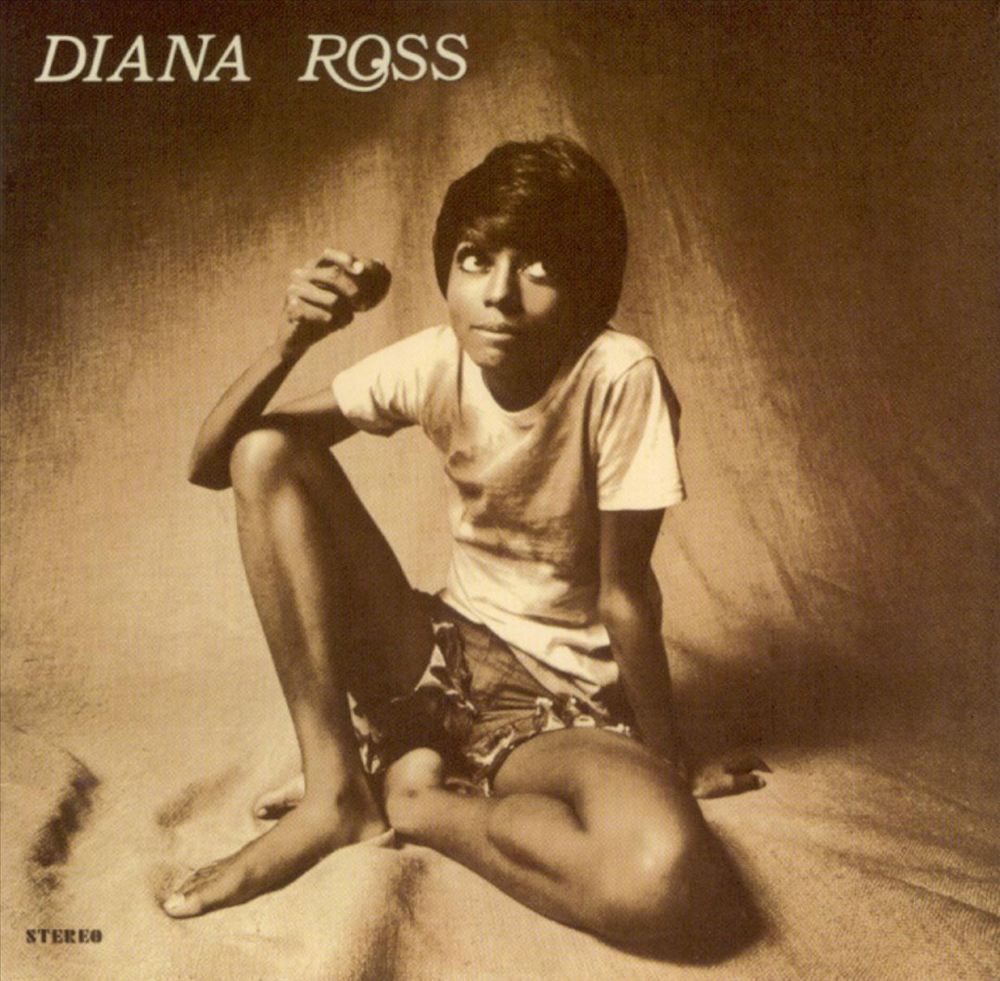
For years (since i was a teenager) i wanted to look like the front cover of Diana Ross’ first solo album in 1970: tiny, flat chested… She looked like a tiny child, despite having a whole adult romantic relationship with Motown CEO Berry Gordy, and giving birth to a child they both produced, in 1971. We could have debates all day about the moral or ethical nature of that relationship (due to the power imbalance), but i will save that for another time. One thing i do know is when i first saw that cover it encapsulated everything i wanted to be.

Invisible.

Despite the photo on the back of the album of the same person who was on the front; while i thought she was beautiful, that woman was not something i aspired to. She was womanly. She was going to be seen. And sexualized in some capacity.

i remember being 10 years old and going on a strictly tuna fish diet for a week. That was the beginning of a relationship with food, based on control. i aimed to do it not simply because i wanted to lose weight, but because that weight loss was tied to not being looked at. i always wanted to be as straight and slim as a board, so i wouldn’t be adultified or ogled by catcallers walking down the street. It is disgusting that i would even have to worry about that kind of thing as a child.

i never told anyone at this point that i was sexually assaulted on the back of a school bus at the age of 8, with onlookers laughing at me. i do not know if that moment triggered the relationship i developed with my body. i really cannot say. i briefly mentioned it in a poem i wrote when i was 15, but i finally told my story in my early 30s.

My fears about ‘growing in certain places’ got more pronounced as i hit puberty, and i saw my sister growing, and getting comments. She also liked boys though, and i did not desire that attention. i never developed anorexia or bulimia, but i became a vegetarian at 14 (and a vegan three years later- which i still am), and i was very active, so i stayed small enough. i was also a punk kid, so people thought i was weird enough to stay away from in that way- another reason why punk is a blessing.

As a teenager i started to develop feelings for a few people i considered friends; however, the feeling was never mutual. This was a pattern that repeated itself over the years, well into adulthood. The feelings were romantic, but a lot deeper than a focus on the physical. However, because i was raised in a society that equates/conflates romance with sex, even though i couldn’t see it i assumed my feelings or attractions were also physical or sexual, as opposed to simply aesthetic or emotional.

There have been times where i did binge eat as a means of control and hiding as well. If i hid behind food, then no one would pay attention to me.

It got to the point where there were a few people who were interested in me primarily in a physical way, and that scared me. i had moments where i was physical with others, but the first time i had what people usually define as ‘sex’ was at the age of 21. It was not exactly consensual as i did not say yes, nor did i say no. i was like a deer caught in headlights as it was happening. i didn’t have anyone to talk to when this happened to me, as this conversation wasn’t even in the public lexicon in the 1990s.

The sexual experiences i have had over the years have been with cis-hetero men who have been abusive (and coerced me into not using protection), or primarily wanted something physical, but not much beyond that. (Women and trans, asexual, pan or nonbinary folks don’t really approach me or show interest like that; i don’t know why.) There was something these men wanted from me (besides the sex)- either to exploit any low self esteem i may have had, or to (in retrospect) use me as a muse to access a connection to their own ‘Blackness’.

One of these men (who told me when i was laying there in the hospital that i was one of the bravest and most important people to him, but also eventually texted that he could no longer talk to me) asked me (again, as i was in pain in a hospital bed) if now being an amputee was going to make me fat.

While i could sit here all day and write a dissertation on how ableist and vain that question is- That is not a question i would ask someone who almost died but eventually survived being hit by a truck, and lost a leg- the one thing i was aware of was how fast any dysmorphia i had returned. As i lay there naked and completely vulnerable as nurses and techs cleaned and wiped me every single day; as i lost 20 pounds as my body worked on healing itself, and as i gained the weight back after i did heal… i maintained a fixation on wanting to still be invisible.

i worked really hard over the years to accept and love myself, and my body. It finally happened at the age of 42. i did jiu jitsu and striking/kickboxing. i was getting better at pullups. i loved riding my bicycle everywhere. Now i have to start over again; when i go outside everyone will see me with just one massively swollen foot and a skin grafted leg.

When i go out people are generally nice to me, but i don’t necessarily feel desired.

i feel like a giant blob with one leg. i dread the summer months, because i cannot be comforted with a sweater or hoodie, concealing my body.

Here is where my contradictions lie. i don’t necessarily feel infantilized when people see me, but at times i do feel patronized, when people tell me i’m brave, or that they wouldn’t know what to do if they became an amputee. Or when people stare at me as if i’m helpless. It is dehumanizing. i question if i was used/dehumanized in some capacity in my sexual experiences (pre-amputation) as well, because i ultimately was a means to a particular end- i’ve begun to question if any non-physical interaction was a calculated way to achieve whatever ends they had in mind. i honestly don’t know.

It comes around, back to desirability. Even as i talk about desire and being desired, i write about it with the understanding that it’s going to be interpreted in a particular way by people who view it with that particular lens. Desire tends to be observed in a specific way, with regards to physical/sexual attraction. If attraction is a reflection of the world around us, then systemically it would make sense why i have never been seen as desirable, in terms of a romantic relationship.

In the Book Sexed Up, Julia Serano discusses sexualization “as a more general tactic to delegitimize and dehumanize people.” If we fall outside of the socially accepted desired norms, people who have been marginalized by the expectations of the norms (whether it’s orientation, gender, ethnicity or disability, etc.) will be seen as “sexually deviant, or predatory, or hypersexual, or desperate, or undesirable, or exotic, or… a ‘fetish object.'”

i have never truly been desired in ways where i am seen as a full human. i recall being told more than a few times over the years that i’d be “a good wife and mother.” i’ve always been told that i’m a ‘nice person.’ i was never sure what any of that meant ultimately, especially as the people who tended to tell me that were married (sometimes with kids themselves), and they had no real interest in me romantically (fortunately).

On the surface, being told you’d make a good wife and/or mother may sound like a compliment; however, like a lot of things i’ve mentioned here it can also be pretty patronizing. Being a wife and/or mother is viewed as virtuous (as opposed to someone who makes the conscious decision to not be those things); it is something that is valued in a heteronormative/heterosexist society and yet mothers are devalued, because it is ‘unpaid work.’ You have to wonder if it’s assumed i’d be a ‘good wife and mother’ because women who are caretakers (or assumed to be so) are not seen as ‘desirable’. Was i often seen as being viewed as a potential ‘good wife/mother’, because it would be expected of me to produce constantly free emotional labor, in addition to a nurturing side that women are expected/assumed to have?

Who is going to care for me?

Anyone i had a real interest in did not reciprocate those feelings; so with what very well may be considered to be an aspect of compulsory sexuality, as mentioned, in order to know what it felt like to be with someone i did get with abusers, or those who had no interest in forming a substantial relationship with me. Had i not done those things, my guess is that at my current age (which is almost 50) i still may not have known what it was like to be with anyone.

i am not writing this for anyone to feel sorrow or pity for me. i learned a lot about myself in these experiences; and like everything else in life, i see these experiences as dialectical.

But we are still here, at the question of desirability. And capitalism.

There has been such a focus on ‘the loneliness of men’, or ‘How masculinity has failed’ as of late. Queries such as these (and there are many) are consistently (and at times, singularly) tied to the brokenness of men. Even if it’s being touted as a it’s a biting critique of ‘toxic masculinity and the manosphere’, there’s still an underlying heteronormativity in the critiques. And a overwhelming emphasis that it’s primarily men who are affected by feelings of rejection and loneliness. Some, but not all pieces on this touch on capitalist frameworks of masculinity being the primary contributor to this ‘epidemic’. Boys and men are being asked to perform tasks that are impossible to fulfill. Their desire to belong and be heard is not fulfilled, and they find someone (usually on the internet) who speaks to them.

Based on my experience of being rejected and being seen as ‘just a friend’ more times to the point where i’ve stopped counting, i could have just as easily fallen into one of these alternate universes. It may not make sense to some, but recognizing the importance of political education in identifying the ways in which we are systemically conditioned to view various types of relationships helps me to make sense of my own misery, which in turn prevents me from acting said misery out on others.

As a darker skinned, very openly anticapitalist, not traditionally feminine woman with a lot of tattoos (who has at some points semi-regularly been called ‘mister’ or ‘sir’ by adult strangers and asked if i was a boy or a girl by children), i’ve certainly over the years been (unfortunately) catcalled; but most (if not all) men who catcall are not looking for a meaningful companionship with you. Objectification more or less warrants a type of control, as opposed to a type of desire i am speaking of.

i live with the understanding that i may never have that experience of being desired, or be in a healthy (romantic) companionship. As i was not deemed desirable enough (beyond the physical) to have a healthy/non-toxic companionship with someone prior to being an amputee; as a woman who now has an apparent disability (in addition to all the other things) i have another set of anxieties, as i wonder if i am going to be fetishized by those who claim interest.

i have never been online to seek out a companion (nor do i ever intend to), but i do think of my own experiences offline, and the experiences of people who tend to not be seen, because the online world (just like music communities in general) is a reflection of what goes on in the ‘real world’.

Because of course, there’s also Satoshi Kanazawa. Remember him? Fortunately, this piece was heavily debunked and critiqued.

What happens to all the broken people in the end? They get thrown away, because they cannot function in a way capitalism needs them. So exploiters of a different kind become the new heroes.

See what i mean by all of this feeling like a job?

‘Cause you lied
Yes you lied

All the shame i feel about my body is a lie. Because someone created the lie.

i know this, and yet still…

i cannot stop the voices in my head.

i want to be desired, but not objectified. i want to be desired, but because i am not desired i want to disappear. i want to disappear because i don’t want to be looked at. i don’t want to be looked at because i have returned to hating my body. i am not even talking about my body being desired sexually. i just hate my body right now. i hate admitting that. And if i hate patriarchal notions and conditioning of how we view the body, why do i hate mine?

i hate that i have this contradiction. i hate it because the body i have now, it’s more likely to be objectified. It’s more likely to be attacked.

i want to be Diana Ross in 1970 (without the fame) so bad. i want to be invisible.

But i also want to be desired. And loved. i want to be held. i want intimacy.

i want to be and feel heard, and seen beyond my body.

When i go out into the world, that is the first thing you see.

All any of us want is to be and feel heard. It is, again, one of the reasons people look for connection wherever they can find it, whether that’s in a community, a writing or a song.

What i have written here hasn’t even scratched the surface of what is happening in my brain. i honestly don’t know where i fit in, when it comes to my life right now. i don’t know where i fit in with my body. i don’t know where i fit in with the people in my life. i feel out of place with everything, and overwhelmed.

Life feels like a job. But through it all, it was a song that saved my life.

Stand Firm…

It wasn’t until we walked up to the microphones at the karaoke joint, when we realized Thank You For Being A Friend (aka ‘The Golden Girls’ theme) was a full song.

We were set to sing the version we knew…  until we saw another part to the first verse. i am old enough to be aware of the song (as i was alive during the song’s initial release- 1978); having seen the credits of ‘The Golden Girls’ time and time again, i even knew Andrew Gold was credited to be the songwriter.  Still, i (and my friend, and many others around the world) had no idea this song we cherished for ourselves had a further set of lyrics, charting one’s sincerity and gratitude towards another person.  The lyrics are simple yet crucial at a time where popular songs center romantic love (or flat out lust) as a goal to attain.  The song, without describing the gender of said ‘friend’, potentially challenges the socially accepted notion that ‘men and women cannot be friends’.  While ideally, a friendship should develop before building on something romantic (as you need a foundation to stand on before you can build the rest of a structure); again, most popular songs about ‘love’ center only the romantic (or lustful) type.

So…  My friend and i sang away, immediately catching on to the structure of this rendition we had no familiarity with (outside of the abridged version), and cherished our moment.  i would also come to have laughs with friends about some of the gospel renditions i would send.

(On a side note:  ‘The Golden Girls’ historically was one of those shows which resonated with varied groups of people, but the prominent voices who vocalized their approval were older women (who are usually not represented in popular culture as having an independent voice) and the LGBTQ+ communities.  Many people also took note of the comic timing of the show, as well as the (at the time (and still in some cases)) controversial subject matter.  The sexual agency of older women, gay marriage and racism/prejudice were a few of many subjects explored on the show, and few shows to this day explore these subjects in a way which resonate.)

It has been in more recent times where i returned to the song.  A sisterfriend and i were discussing Andrew Gold’s original version the other day, and upon listening to it i began to cry.

And when we both get older
With walking canes and hair of gray
Have no fear, even though it’s hard to hear
I will stand real close and say,
Thank you for being a friend 

Living amongst so much trauma, drama and depression as of late, it’s been even more isolating because for the most part i do not have my closest friends here with me. Though we talk on the phone amongst the geographical and time differences- and i am thankful this is able to happen… Not being able to give and receive hugs (and i love hugs!); not being able to laugh at or analyze/dissect bad movies late at night; not being able to have long conversations about political issues; to go roller skating and help each other get up when we fall, to have code words and sentences only we know, to sing songs with at the karaoke joint, to watch each other grow…  It gets a bit lonely, so i began to cry.

====================================================================

Increasingly, the concept of ‘friendship’ appears to be shifting.  Prior to social media you had the concept of the ‘pen pal’; Looking forward to receiving a letter in the mail was one of the highlights of the day.  Sometimes you would even go to visit each other.  The word ‘friend’ gets used lightly, or in a cavalier fashion in this day and age, particularly with the use of social media.  People are ‘friends’ based on a limited connection; however, with some exceptions people do not seem to build relationships with each other outside of that.  Popularity is judged based on how many ‘likes’ or ‘followers’ one has.  There are times when a person is introduced as a ‘friend’ in social circles, yet the person doing the introductions cannot remember the ‘friend’s’ name.

My ideas about friendship have always been based on the ‘classic’ definition:  someone you could confide in, someone you could be vulnerable to, someone who will hold you accountable without being judgmental…  When you are young you think you are going to have all of the same friends for the rest of your life.  When this doesn’t happen you may ask a lot of questions of yourself; and just as this happens you gain a new series of friends (with a couple left over from the last part of your journey).  The cycle continues, and the people you once shared a closeness to have encountered new parts of their own journeys.  We all grow older; some of them get married, become parents, begin careers, change interests…  There are times along this journey where you may feel alone.  Every single person you contact is unavailable.  Some of them stop speaking to you for unknown reasons.

Holding on to the more ‘classic’ definition of what a friend is can be incredibly frustrating.  While relationships like this can, and still do exist; i had to re-explore what this actually means, given my current set of experiences and circumstances.  Where i am, nothing is the same as it was…  At all.  The first time i experienced this feeling was when one of my best friends, Barry, left this earth on February 4, 2011.  He left this earth at the same age i will be this year.  He was my rock.  Our late-night conversations always grounded me.  He pushed me to be my best creative self.  He was loved by so many people in his respective communities.  He was a father, an artist, a multi-instrumentalist…  a friend.

To this day, i have difficulty listening to his voice, or even looking at him.  i have audio of us talking, and i cannot listen to it.  Despite posting the video above, i cannot look at him. i avoid thinking about him, because it still hurts.  While i acknowledge one’s physical transition to be another aspect of their journey; while i acknowledge that his relationship to me served a very specific purpose in my life (in a spiritual sense); while i have acknowledged his not physically being here, something still feels very out of place for me, and i have yet to figure out what this is.  i have had some people in my life whom i’ve been close to leave this earth, and he is the only person i have not been able to move past.  Something in my life feels unfinished with him.

Shortly before his transition i had been trying to contact him for some time, and i had not heard back from him.  He was one of the busiest people i knew, but it was strange to not get one of his late-night calls after i’d get out of my job.  When i heard of his transition (from a mutual friend at the time, on social media no less) i felt paralyzed.  i didn’t particularly feel a need to find out any of the details (even though i did find out).  i did briefly communicate with his daughters after the transition; there were also people he was close to who contacted me, letting me know he talked about me a lot.  i didn’t have an interest in searching for information about any viewings or homegoing ceremonies.  He was one of my best friends but i felt disconnected from it all.

Given that i’ve acknowledged his not physically being here, i don’t consider it to be a denial stage.  i still feel that paralyzing feeling when i think about him though.

==================================================================

Holding on to the ‘classic’ definition can be limiting, not only because it potentially holds on to this illusion of permanence; but the concept of ‘friendship’ also tends to shift in light of how ‘friends’ are viewed in other aspects of our lives.  Though my mother lives close to me (and as we’ve gotten older developed a friendship), our relationship is going to be different, based on the mother/daughter dynamic.  Many who believe in the existence of a higher power (or God) would consider a relationship with God to be a friendship, despite never having physically met, or even knowing what this one they consider a friend looks like. When cats and dogs (and other non-humans) are adopted, they are immediately considered by some to be friends or companions (or even babies), despite being a different species (and having different sets of communication tools) as a human.  The concept of ‘friendship’ makes sense when looking at God or a furry companion as a source of comfort.

In more recent times, how i identify ‘friendship’ has shifted.  Given that my closest friends are not physically here, this shift has become a necessity.  A few days ago i was riding my bicycle, and i saw a man taking pictures of the New Jersey skyline; his graying hair balding in the center of his scalp.  Never having met before, we exchanged hellos as we passed each other, and he said “It’s nice to see you,” with a stark familiarity. i do not know if he imagined that he knew me, or if he felt the same unknown familiarity.  Were we instant friends?  No.  Still, i am learning not to question such things.  It’s like when a baby smiles back at you, or begins to wave hello (or goodbye) 20 seconds after you did so. In these brief moments of unknown familiarity lies a sense of comfort, in a place where you experience trauma and isolation…  In a place where you feel like a stranger.  i really do think the universe sends us situations and random people to remind us of our humility.

==================================================================

i was in midtown Manhattan on my bicycle, at a stoplight.  Being in a state of limbo (a state i am still experiencing, honestly- financial, emotional and more), a beautiful Rasta or Roots woman walked towards my direction. We exchanged silent glances, as if to say ‘hello.’  She continued to walk, still looking at me, and the only words she said were “Stand firm.”  i nodded my head and placed my hands over my heart, indicating thanks.  i marveled at this comment.  Is this something she’s said to others?  What was her perception of me, for her to recognize where i was at?  The funny thing is, i had not even reached the most stressful part of this journey at that point, so it was clear her intuition was strong.

There have been so many ‘tiny’ experiences to receive joy from, and that moment was simply, one of many i placed in my back pocket of precious moments.  Soon enough, those two words would make more sense than any two words i’ve heard in a long time. This woman was a true friend.  She taught me a major lesson.

Stand Firm.

i am in the most challenging place in my life i’ve ever been (and i have been through many), and while it looks as if i will never see the end of these challenges, i know like anything else, these challenges will pass.  Do i wish i knew when it will all pass?  To be honest, of course!  Not knowing causes major anxiety.  Being in an emotional, spiritual, economic and political battle all at once is enough to place someone in a constant state of anxiety.

Stand firm.

Live clean, let your works be seen,
Stand firm, or go feed worm.

-Peter Tosh

In the end, your actions are going to convey your true character.  At the same time, the words you speak (or sometimes, the music you listen to or images you watch) are going to bring either life or death to a situation.  What you are willing to fight and advocate for is going to convey that life or that death.  Every day, so many of us are beaten down (spiritually, economically, politically), we end up battling each other, and not the very systems which beat us all down.  And there is that one person who, out of the blue, in that moment of desperation…  reminds us to stand firm.

In the absence of your closest friends, other friends exist in the briefest moments.  i am still learning not to question it.

Thank you for being a friend.

Image: Young Friends Looking Happy And Posing For Camera, Creative Commons